

Dr. Piyush Jain
Dr. Piyush Jain provides pediatric clinical guidance for developmental and neurodevelopmental concerns where appropriate.
Short answer: It is common for toddlers to find screens engaging, since bright, fast-moving content is designed to hold attention easily. This on its own is not unusual. It becomes more worth noticing when a toddler consistently responds to a screen but does not reliably turn, make eye contact, or engage when a parent is right in front of them talking, calling their name, or trying to play - a pattern worth raising with a paediatrician or developmental specialist.
Share a few details and the Genesis Neurogen team will contact you to confirm availability.
Tablet and phone content is often fast-paced, brightly lit and designed specifically to capture and hold a young child's attention with minimal effort on the child's part. A face-to-face interaction, by comparison, asks a toddler to actively track a changing expression, tone of voice and turn-taking rhythm. Many toddlers find screens easier to attend to for this reason alone, and this is not automatically a red flag.
What some parents in Rishabh Vihar and Karkardooma have described to us is a more specific pattern: a toddler who looks instantly toward a tablet when it starts playing, but does not reliably turn toward a parent calling their name from the same distance, or does not seem to engage with a parent's attempts at face-to-face play, songs or peekaboo the way they do with a screen. It is this gap between screen-response and person-response, rather than screen use itself, that is worth paying attention to - the kind of pattern a specialist comparing options at an autism therapy centre in East Delhi would ask about directly.
A developmental evaluation looks at a toddler's overall social engagement and communication - eye contact, response to their name, interest in back-and-forth play with people - rather than screen habits in isolation. Screen preference alone does not diagnose anything; it is one observation among several that a specialist considers together.
Reducing unstructured screen time and building in more face-to-face play, songs and simple games can help many toddlers either way. If a toddler consistently responds far more to a screen than to a parent's direct attempts to connect, especially alongside reduced eye contact or response to their name, it is worth discussing with a paediatrician or an early intervention specialist rather than waiting to see if it changes on its own.
Book a developmental screening for your toddler with our autism therapy and early intervention team. Call 7481909090 or message us on WhatsApp to get started.
No, there is no evidence that screen time on its own causes autism. The concern here is a specific pattern - responding much more to a screen than to direct social interaction with a person - which is one observation worth discussing, not a cause.
Brief preference for engaging screen content is common and not unusual on its own. It is the consistent gap between screen response and person response, especially alongside other signs, that is worth a closer look.
Reducing unstructured screen time and increasing face-to-face play is reasonable either way, but it is better to discuss the overall pattern with a paediatrician or specialist rather than relying only on removing screens to resolve the concern.
It typically looks at a toddler's overall social communication - eye contact, response to their name, interest in shared play - across different settings, not just their behaviour around screens.
Useful context about the Genesis Neurogen doctors, so you can understand the wider clinical practice while reading this article.
Dr. Piyush Jain provides pediatric clinical guidance for developmental and neurodevelopmental concerns where appropriate.
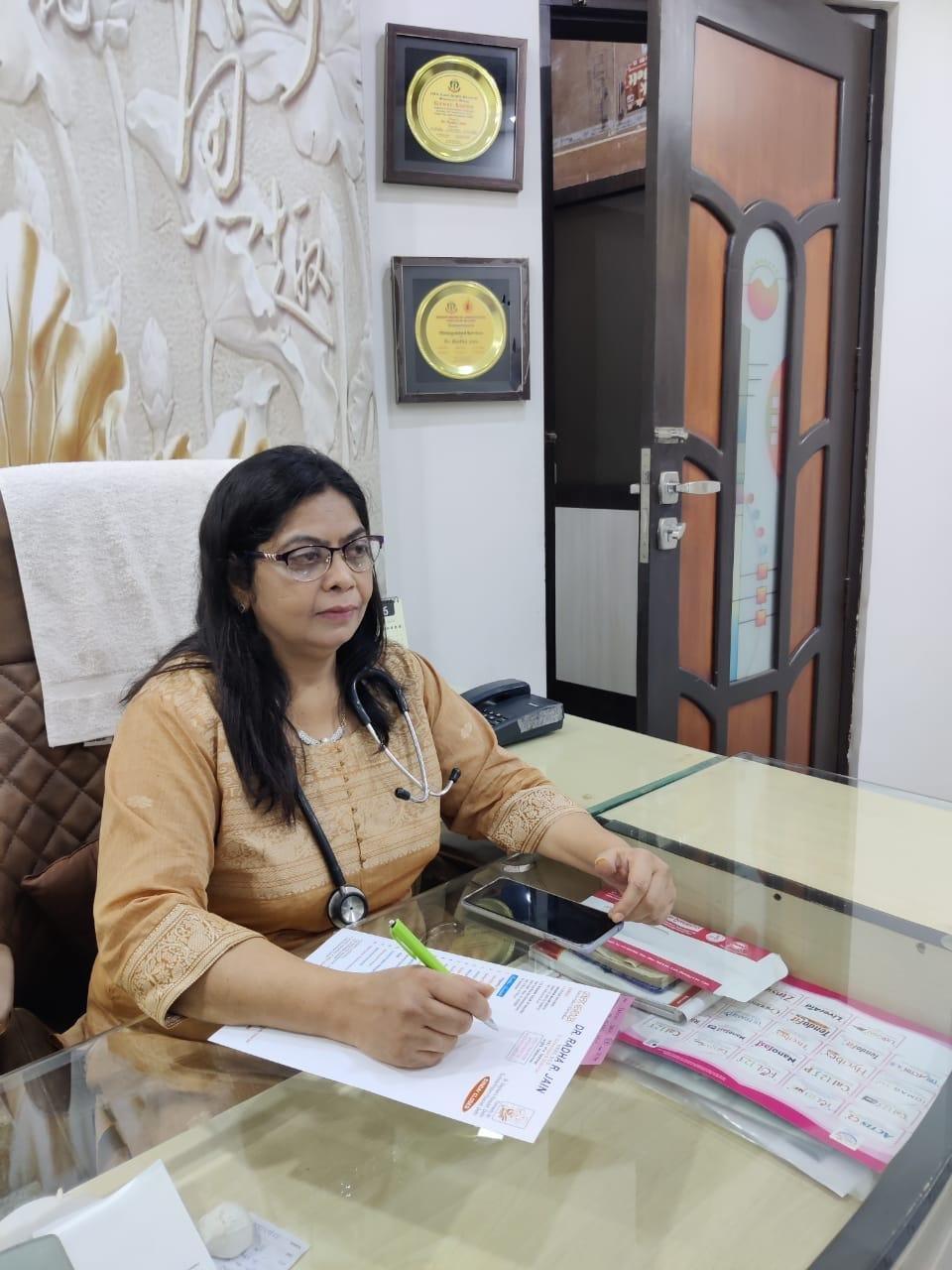
Dr. Radha Jain is the Senior Consultant Gynecologist & Obstetrician within the wider Genesis Neurogen clinical practice. Her women’s-health services are detailed on the main Genesis Neurogen Delhi website.
Use the map below to open the supplied location in Google Maps and get directions.