

Dr. Piyush Jain
Dr. Piyush Jain provides pediatric clinical guidance for developmental and neurodevelopmental concerns where appropriate.
Short answer: Reading aloud together as a class, often called choral reading, can genuinely feel easier and smoother for some children who stammer, since fluency often improves when speaking in unison with others. For other children, it can feel exposing if their voice stands out from the group, or uncomfortable if they are singled out to read a section alone afterward. The effect varies from child to child, which is worth discussing directly with the teacher.
Share a few details and the Genesis Neurogen team will contact you to confirm availability.
Many speech-language professionals have long noted that speaking in unison with others - reading the same words at the same time, as in choral or group reading - tends to reduce stammering for many people who stammer, likely because the shared rhythm and pacing takes some of the moment-to-moment timing pressure off any one speaker. For some children, a classroom choral reading exercise can feel like one of the easier parts of the school day rather than a source of stress.
For other children, the same activity can feel uncomfortable if their voice is clearly audible above the group, if classmates notice and comment on it, or if the choral section is immediately followed by being asked to read the next part alone. The relief of unison reading can disappear the moment individual reading resumes, sometimes making the contrast between the two feel more noticeable to the child, even if the choral part itself went smoothly. Parents in Rishabh Vihar and Karkardooma have described both experiences - some children genuinely enjoying the choral sections, others feeling put on the spot once individual reading begins.
Since the effect genuinely differs between children, it helps to ask your own child directly how choral reading feels for them, rather than assuming either way. If individual reading that follows a choral section is the harder part, discussing options with the teacher - such as reading a shorter section, or not always reading last - can reduce pressure without removing the child from the activity entirely. A speech-language therapist experienced in childhood stammering can also help build broader classroom confidence. Parents researching stammering therapy in Delhi often ask what the first few sessions actually involve, which our guide on what the first sessions involve covers.
Book a stammering and fluency assessment for your child with our stammering and fluency team. Call 7481909090 or message us on WhatsApp to get started.
It often helps in the moment, since the shared rhythm of reading together tends to reduce stammering for many speakers, though the experience still differs between children.
Yes, for some children, especially if their voice stands out from the group or if individual reading follows immediately afterward, making the contrast feel more noticeable.
Not necessarily. For many children it is genuinely one of the easier parts of the school day. It is more useful to ask the child directly how it feels, and address the specific part that is hard, such as the individual reading that follows.
A therapist experienced in childhood stammering can work on building confidence and fluency strategies that help across different classroom reading situations, not just one specific activity.
Useful context about the Genesis Neurogen doctors, so you can understand the wider clinical practice while reading this article.
Dr. Piyush Jain provides pediatric clinical guidance for developmental and neurodevelopmental concerns where appropriate.
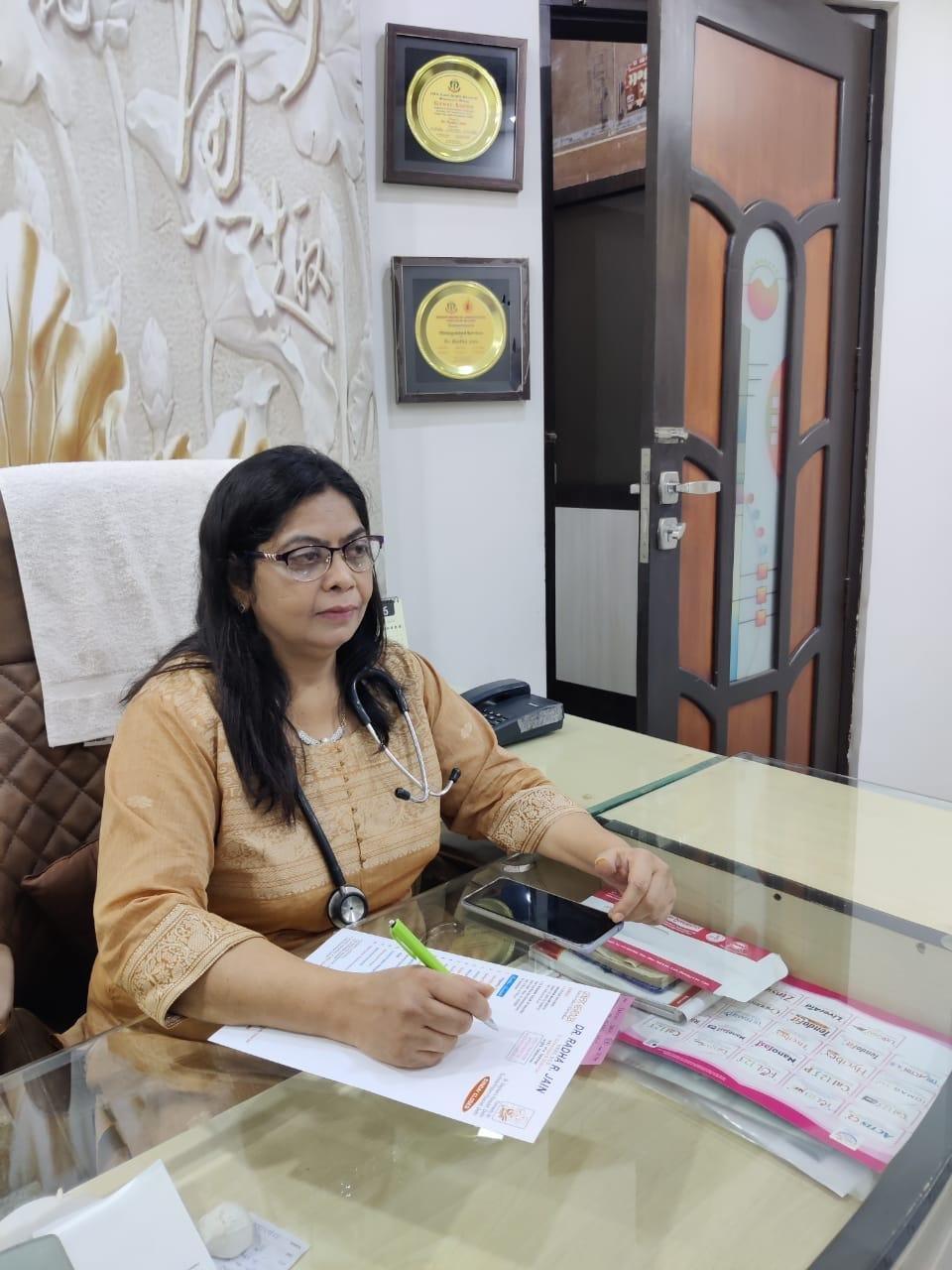
Dr. Radha Jain is the Senior Consultant Gynecologist & Obstetrician within the wider Genesis Neurogen clinical practice. Her women’s-health services are detailed on the main Genesis Neurogen Delhi website.
Use the map below to open the supplied location in Google Maps and get directions.