

Dr. Piyush Jain
Dr. Piyush Jain provides pediatric clinical guidance for developmental and neurodevelopmental concerns where appropriate.
Short answer: It is common for a bilingual child's clarity to differ between languages, often simply because of how much practice time each language gets. A noticeable, persistent gap - where one language is clearly articulated and the other is consistently mumbled or hard to follow - is usually about exposure and practice rather than a speech disorder, but it is still worth a speech-language opinion if the gap is large or one language's clarity never seems to catch up.
Share a few details and the Genesis Neurogen team will contact you to confirm availability.
Speech clarity depends heavily on how much a child hears and practises each sound and word pattern. In many bilingual Delhi homes, one language - often Hindi, or whichever is spoken most at home - gets far more daily speaking practice than the other, which is usually learned more through school, books or screens. Different languages also use different sound combinations; a child may have mastered the specific sounds and rhythms of one language well before the other simply because of exposure, not because of any underlying speech difficulty.
Parents often describe a child whose Hindi sentences come out smoothly and are easy for family members to understand, while the same child's English sounds more effortful, mumbled, or missing certain sounds altogether - or sometimes the reverse, especially in homes where English is used more at school than at home. We hear this from families across Rishabh Vihar and Karkardooma whose children are managing two languages at once; it is one of the most common bilingual-development questions parents raise.
A moderate clarity gap that slowly narrows as exposure to the weaker language increases is usually not a concern. It is worth getting checked by a speech-language therapist if the gap is large, does not improve despite regular exposure to both languages, or if the child's speech is also unclear within their stronger language. Parents looking into where to get this assessed often ask what a speech therapy clinic in Delhi actually checks in a first visit, which our guide on what to ask on the first call covers.
Book a speech and language assessment for your child with our speech and language therapy team. Call 7481909090 or message us on WhatsApp to get started.
Yes, this is common and usually reflects how much practice each language gets rather than a speech problem.
Not usually. Reducing a child's overall language exposure can affect both languages. A speech-language therapist can advise on balanced exposure rather than cutting one language out.
If the gap between languages is large and is not narrowing over several months despite regular exposure to both, it is reasonable to get a professional opinion rather than waiting indefinitely.
It can, especially if the school's primary language is the one the child is less clear in. Flagging this early to teachers and a speech-language therapist can help put the right support in place.
Useful context about the Genesis Neurogen doctors, so you can understand the wider clinical practice while reading this article.
Dr. Piyush Jain provides pediatric clinical guidance for developmental and neurodevelopmental concerns where appropriate.
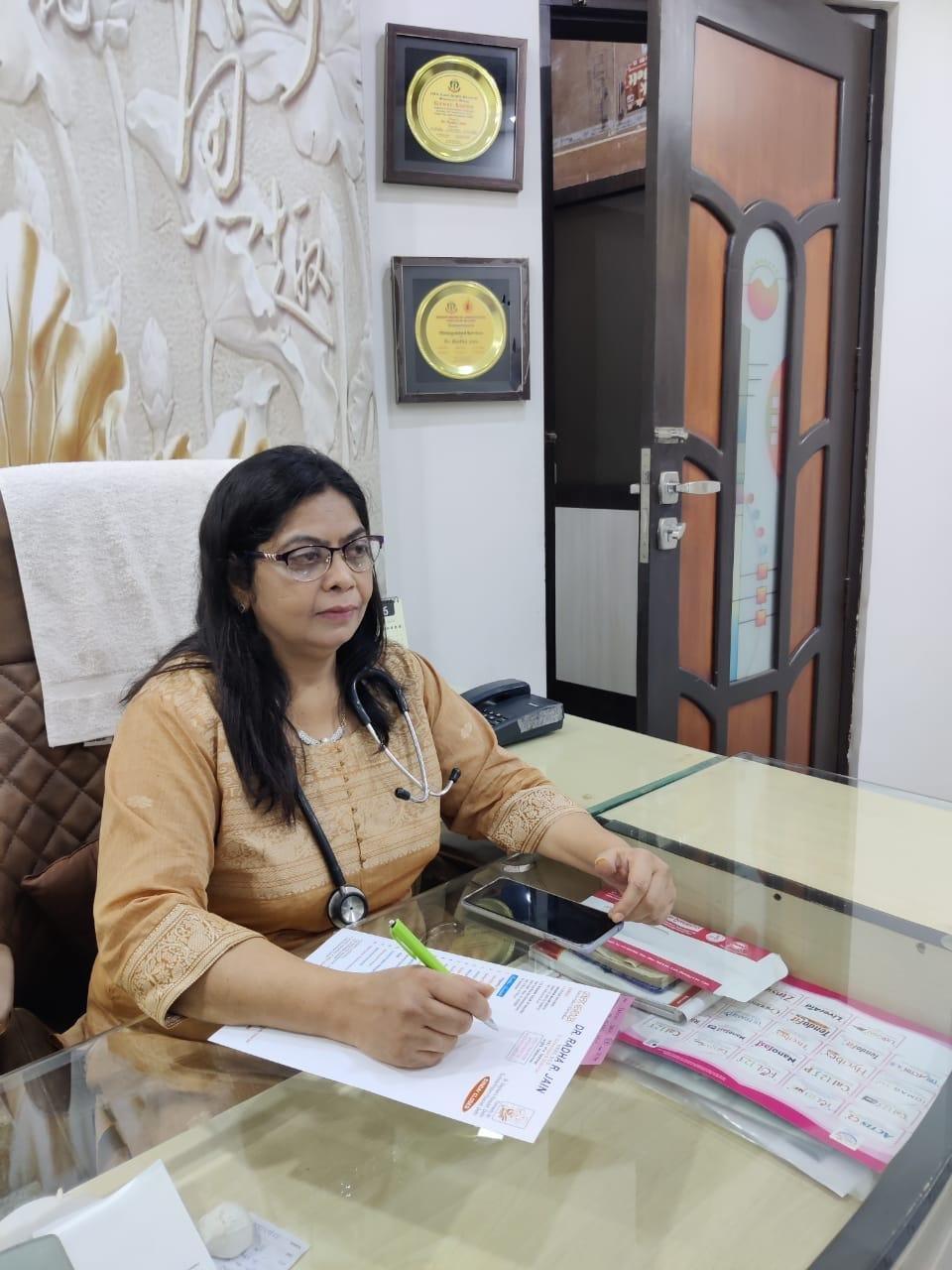
Dr. Radha Jain is the Senior Consultant Gynecologist & Obstetrician within the wider Genesis Neurogen clinical practice. Her women’s-health services are detailed on the main Genesis Neurogen Delhi website.
Use the map below to open the supplied location in Google Maps and get directions.