

Dr. Piyush Jain
Dr. Piyush Jain provides pediatric clinical guidance for developmental and neurodevelopmental concerns where appropriate.
Short answer: It is fairly common for a child's speech to sound a little less clear or energetic for a while after a long illness, high fever or hospital stay, mainly due to general fatigue, reduced practice talking, or a temporarily sore throat or weakened voice. Most children recover their usual speech clarity within a few weeks as they regain strength. It is worth a speech and language opinion if clarity has not noticeably improved after a few weeks, or if other new difficulties have appeared alongside it.
Share a few details and the Genesis Neurogen team will contact you to confirm availability.
Speech takes coordinated effort from breathing, vocal cords and the muscles of the mouth and face, all of which can be affected when a child is unwell. A long fever, a hospital stay with reduced talking, or general exhaustion afterward can make speech sound a little slower, quieter or less clear for a period, simply because the child has less energy and has had less practice talking day to day.
Parents often describe a child whose speech was progressing normally before the illness, but who now sounds a bit mumbled, tires quickly mid-sentence, or seems to need more effort to get words out clearly. This is usually most noticeable in the first couple of weeks after returning home, and tends to ease gradually as strength, appetite and daily routine return to normal.
If clarity has not meaningfully improved after a few weeks of being back to normal routine, or if a child seems to be struggling with something new - word-finding, following instructions, or sounds that were clear before the illness - it is reasonable to get a speech and language evaluation. Families looking into a speech therapy clinic in Delhi after this kind of dip often ask specifically how an assessment accounts for a recent illness when judging a child's baseline.
Gentle, low-pressure talking practice - reading together, simple back-and-forth conversation, singing familiar songs - can support recovery without adding pressure. Rest and a return to normal eating and routine usually help naturally as well. A professional opinion is most useful when the dip in clarity seems to be lingering rather than steadily improving.
Book a speech and language evaluation for your child with our speech and language therapy team. Call 7481909090 or message us on WhatsApp to get started.
Yes, this is fairly common, especially after a long fever, hospital stay, or illness involving reduced talking and eating. It is usually temporary and improves as the child regains general strength.
If there is no real improvement within a few weeks of returning to a normal routine, or if it seems to be getting worse rather than better, it is reasonable to get a speech and language evaluation rather than waiting longer.
This depends entirely on the specific illness and individual case, and is best assessed directly by a doctor or speech-language therapist who knows the medical history, rather than assumed either way.
Low-pressure talking activities like reading together, familiar songs, and simple conversation can help, alongside rest and a return to the child's usual eating and daily routine.
Useful context about the Genesis Neurogen doctors, so you can understand the wider clinical practice while reading this article.
Dr. Piyush Jain provides pediatric clinical guidance for developmental and neurodevelopmental concerns where appropriate.
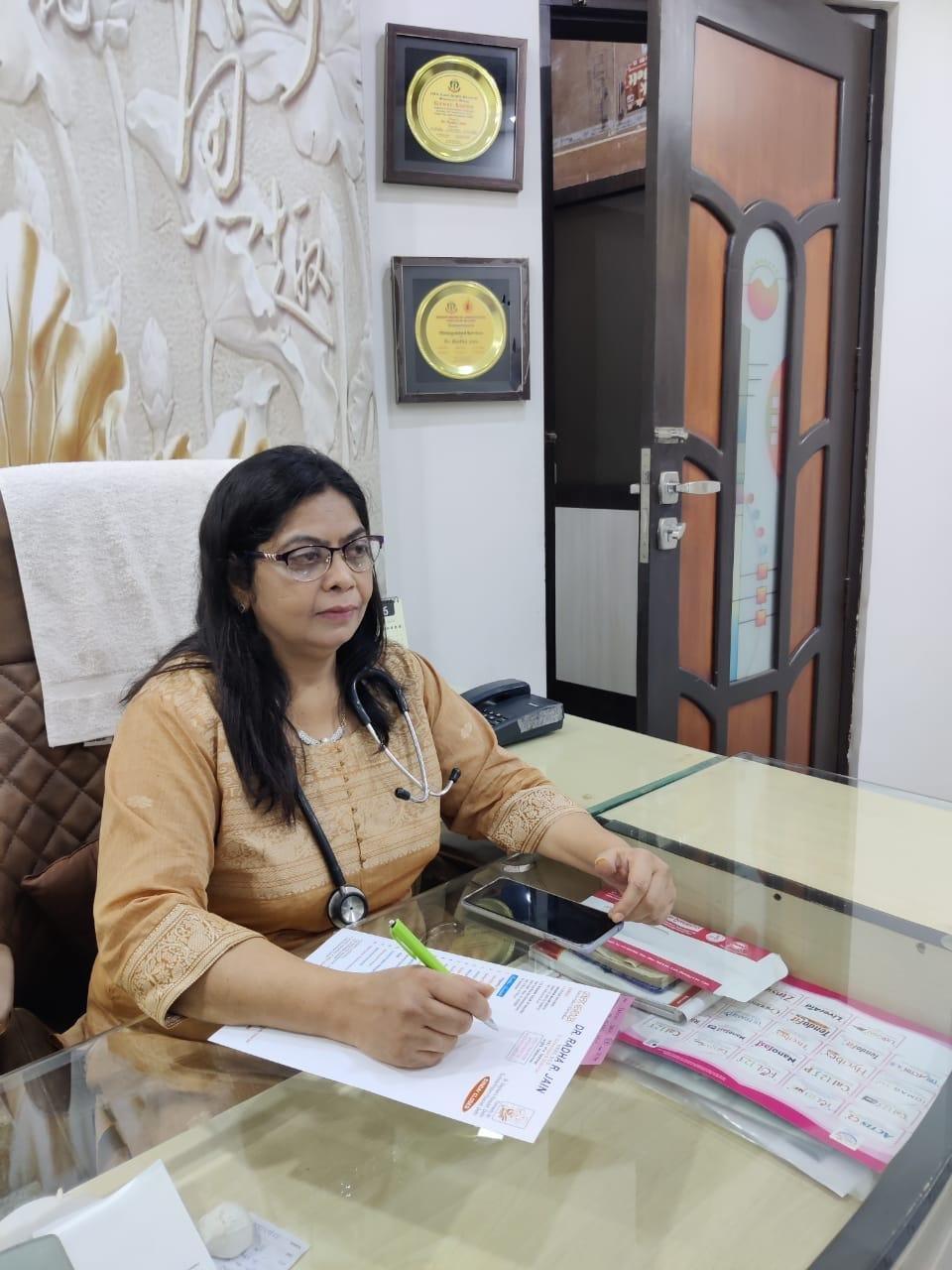
Dr. Radha Jain is the Senior Consultant Gynecologist & Obstetrician within the wider Genesis Neurogen clinical practice. Her women’s-health services are detailed on the main Genesis Neurogen Delhi website.
Use the map below to open the supplied location in Google Maps and get directions.