

Dr. Piyush Jain
Dr. Piyush Jain provides pediatric clinical guidance for developmental and neurodevelopmental concerns where appropriate.
Short answer: Some children find a visually busy page or board - lots of colours, images, borders and text competing at once - genuinely harder to process than a plain one, even when the actual content is well within their ability. This can show up as frustration, avoidance, or losing focus specifically with visually cluttered material, and can be a sign of visual sensory sensitivity worth discussing with a sensory integration therapist if it is frequent.
Share a few details and the Genesis Neurogen team will contact you to confirm availability.
Most children can filter out some visual "noise" automatically and focus on the relevant part of a page or board. For a child with visual sensory sensitivity, a worksheet full of bright colours, decorative borders, multiple images and blocks of text can all compete for attention at once, making it genuinely harder to find and focus on the actual task, rather than simply being a case of not concentrating hard enough.
This can show up as a child who manages a plain, simply laid-out worksheet calmly but becomes frustrated, rushes carelessly, or asks to stop when given a colourful, image-heavy one covering the same material. It can also appear as difficulty finding specific information on a busy classroom noticeboard or textbook page, even when the child can clearly read and understand the content once it is pointed out directly. Parents in Rishabh Vihar and Karkardooma have described a similar pattern - a capable child who seems to "switch off" specifically around visually busy material rather than simpler formats.
At home, offering a plainer version of the same task, or covering extra visual elements on a page with a blank sheet to reduce clutter, can make a noticeable difference for some children. It is worth a professional opinion if this pattern is frequent, affects schoolwork regularly, or comes together with other sensory sensitivities such as discomfort with bright lights or loud sounds. Many parents researching sensory integration therapy in Delhi want to know what a first session actually involves, which our guide on what the first session covers explains.
Book a sensory processing assessment for your child with our sensory integration therapy team. Call 7481909090 or message us on WhatsApp to get started.
Not necessarily. A child with visual sensory sensitivity may focus well on plain material but specifically struggle with visually busy pages, which is a different pattern from a general difficulty staying focused.
Offering a plainer version of worksheets, reducing unnecessary decoration on key materials, or allowing the child to cover parts of a busy page can help reduce visual competition for attention.
Not usually in the eyesight sense. This is about how visual information is processed and filtered by the brain, not about how clearly the eyes see, though it is reasonable to rule out a vision check too.
If the pattern is frequent, clearly affects schoolwork, or comes together with sensitivity to other sensory input like bright lights or loud noises, a sensory integration assessment can help clarify what is going on.
Useful context about the Genesis Neurogen doctors, so you can understand the wider clinical practice while reading this article.
Dr. Piyush Jain provides pediatric clinical guidance for developmental and neurodevelopmental concerns where appropriate.
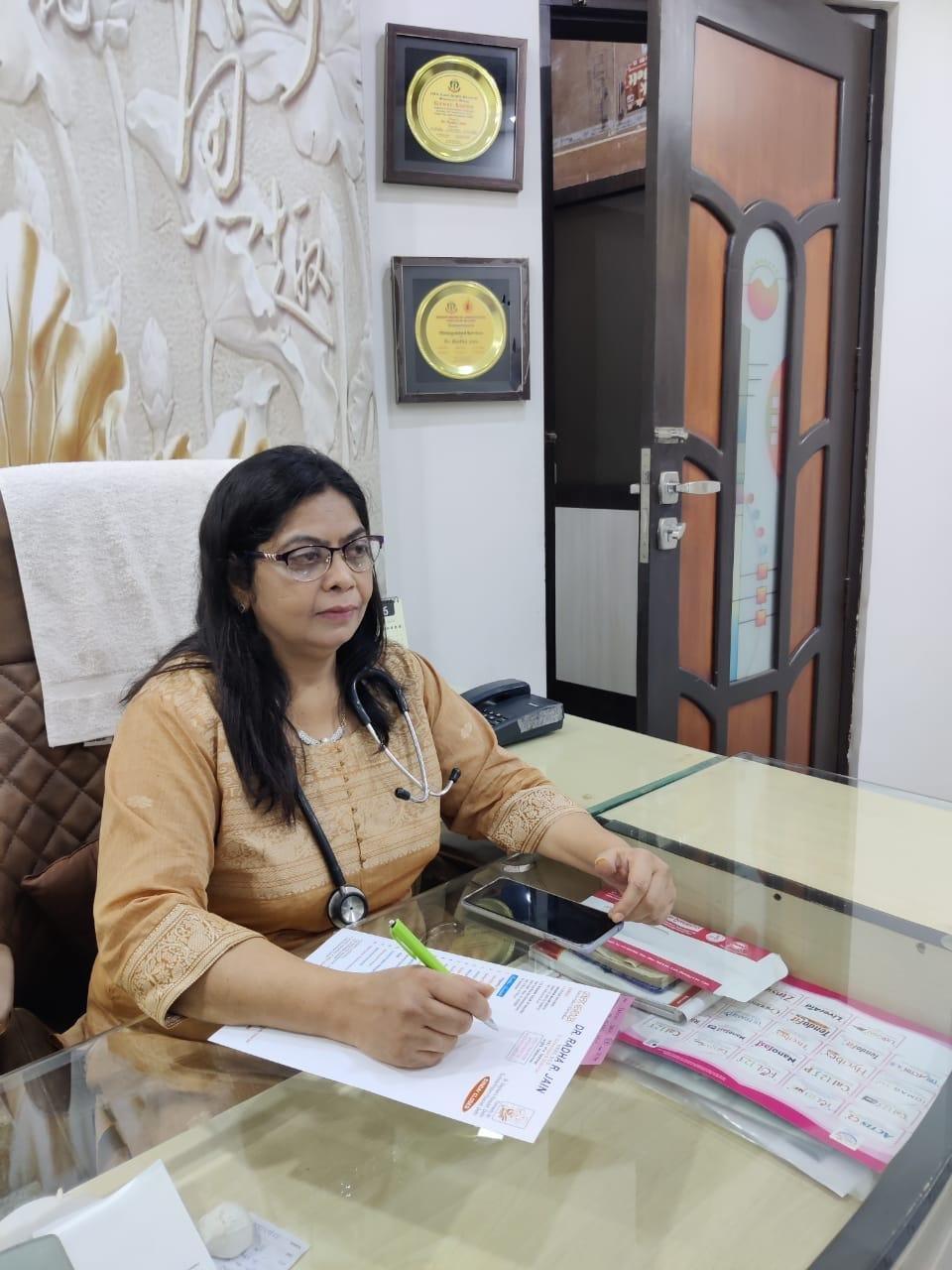
Dr. Radha Jain is the Senior Consultant Gynecologist & Obstetrician within the wider Genesis Neurogen clinical practice. Her women’s-health services are detailed on the main Genesis Neurogen Delhi website.
Use the map below to open the supplied location in Google Maps and get directions.