

Dr. Piyush Jain
Dr. Piyush Jain provides pediatric clinical guidance for developmental and neurodevelopmental concerns where appropriate.
Short answer: Getting visibly stuck trying to start a word - with a tight jaw or face, a pause with no sound, or noticeable physical effort before the word finally comes out - is a pattern called blocking, one of the recognised forms of stammering. It looks different from repeating sounds or words, but is evaluated and supported in similar ways by a speech and language therapist with experience in fluency.
Share a few details and the Genesis Neurogen team will contact you to confirm availability.
Stammering (stuttering) can show up in a few different ways. Some children mainly repeat sounds, syllables or whole words ("b-b-ball"). Others experience blocking - a brief but noticeable stop where the mouth or vocal cords tense up and no sound comes out for a moment before the word is finally produced, often with visible physical tension in the face, jaw or neck. Blocking can be more distressing for a child to experience than repetition, because the stuck feeling is very noticeable to them even if it only lasts a second or two.
Parents often focus on counting repeated sounds, but the presence of visible physical effort - a tight face, blinking, head movement, or audible straining - is actually an important detail for a speech therapist, since it can indicate the stammering is moving beyond mild, occasional disfluency. Families near Shreshtha Vihar have described their child going quiet mid-sentence with a visibly tense face before a word finally comes out, which is a clear example of the blocking pattern that benefits from a proper fluency evaluation rather than a wait-and-watch approach alone.
A fluency assessment looks at the type of stammering (repetition, blocking, or prolongation), how often it occurs, any visible physical tension, and how the child feels about their own speech, especially as they get older. Therapy approaches are chosen based on this full picture rather than a single type of disfluency. If blocking is frequent, comes with visible strain, or seems to be affecting your child's confidence in speaking, our stammering and fluency therapy team can carry out a full evaluation.
Book a stammering and fluency evaluation for your child with our stammering and fluency therapy team. Call 7481909090 or message us on WhatsApp to get started.
Not necessarily more serious, but the visible physical tension involved is an important detail that a speech therapist takes into account when assessing severity and planning support.
This visible tension often reflects the physical effort of trying to push past a moment of blocked speech, and is a recognised feature of this type of stammering.
Gentle, unpressured responses are generally more helpful than instructions to relax or try again, which can sometimes increase a child's self-consciousness about speaking.
If blocking is frequent, involves visible physical strain, or has lasted more than a few months, it is reasonable to seek an evaluation rather than wait further.
Useful context about the Genesis Neurogen doctors, so you can understand the wider clinical practice while reading this article.
Dr. Piyush Jain provides pediatric clinical guidance for developmental and neurodevelopmental concerns where appropriate.
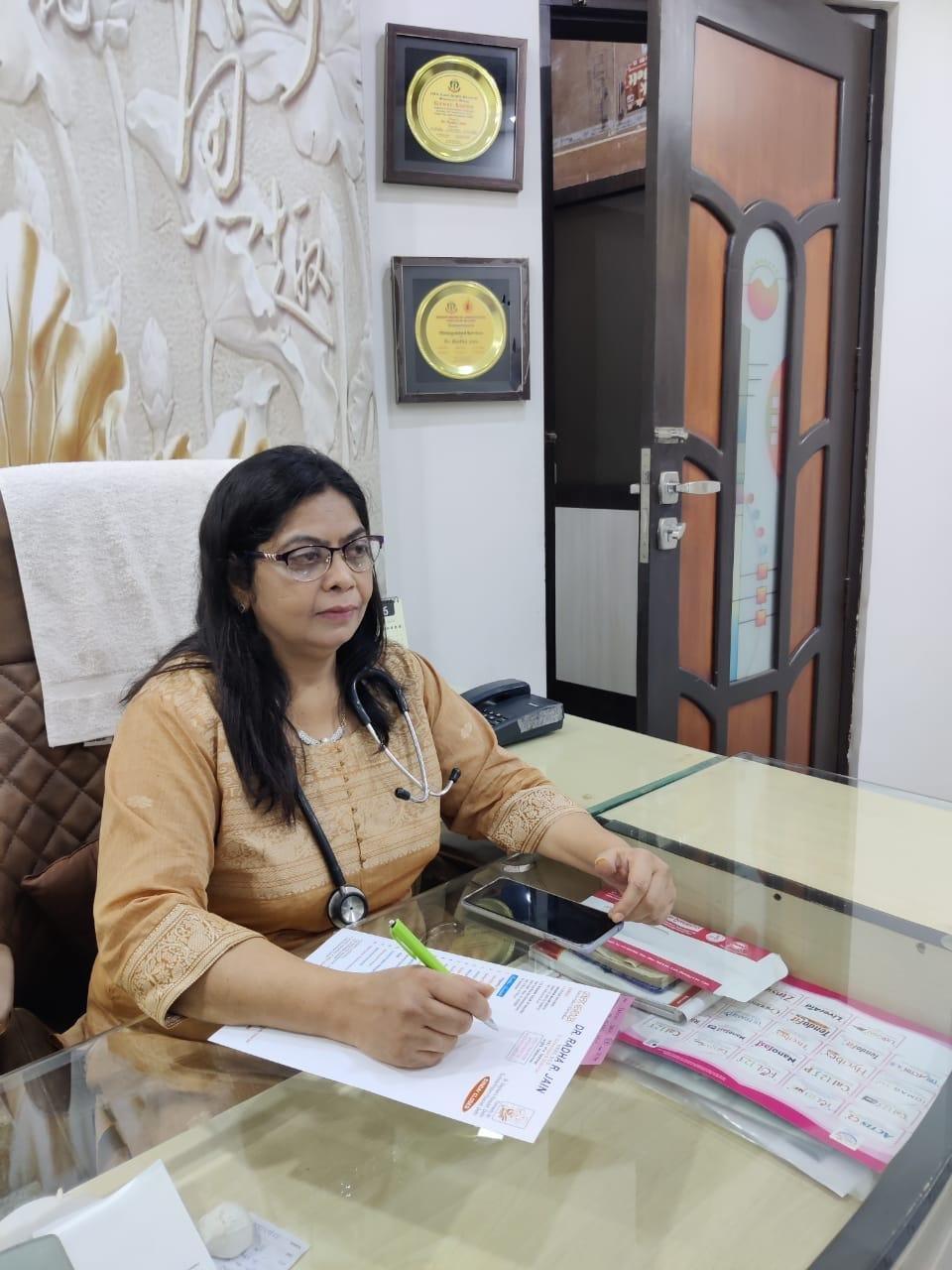
Dr. Radha Jain is the Senior Consultant Gynecologist & Obstetrician within the wider Genesis Neurogen clinical practice. Her women’s-health services are detailed on the main Genesis Neurogen Delhi website.
Use the map below to open the supplied location in Google Maps and get directions.